



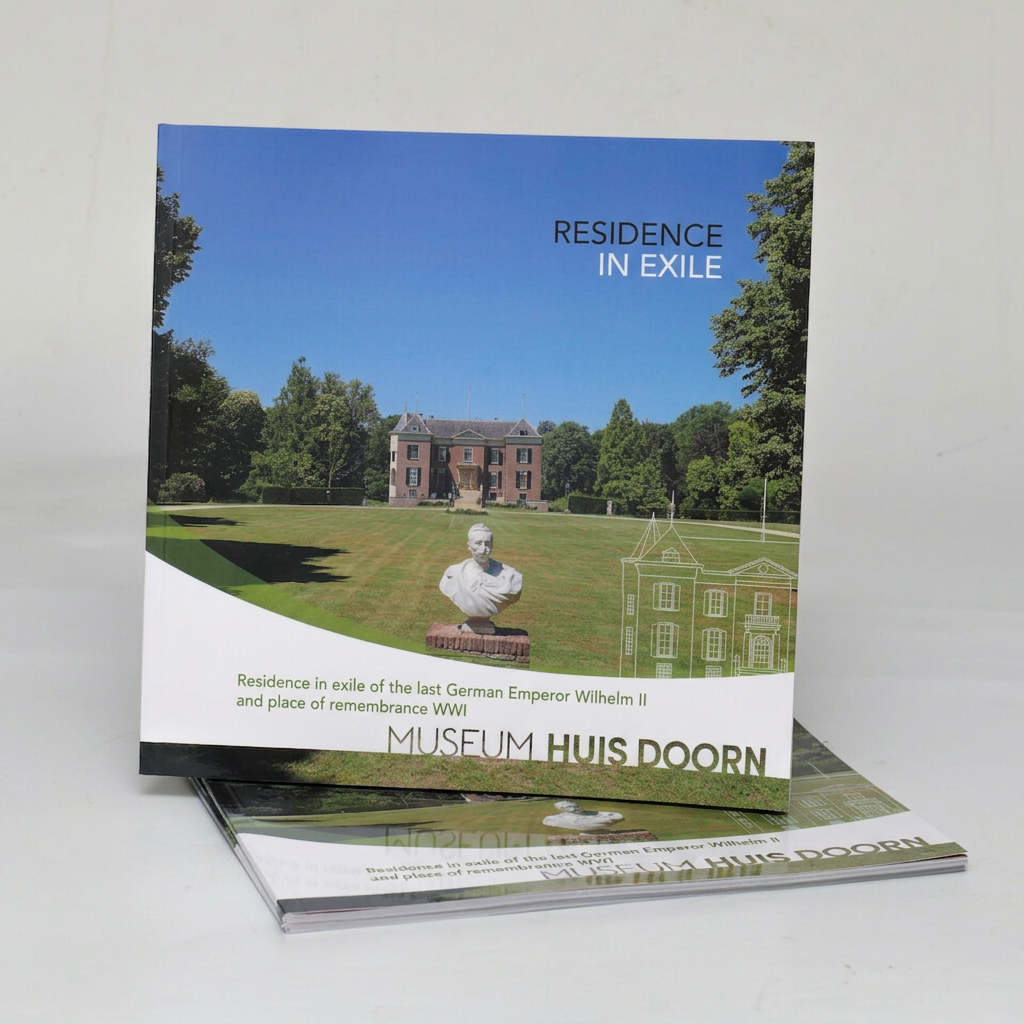
Residence in Exile
The remarkable story of the German ex-Emperor Wilhelm II, who spent the rest of his life in exile in Doorn following defeat in the First World War.
Huis Doorn owes its fame above all to the last German Emperor, Wilhelm II, who settled here under the pressure of circumstances. Germany's defeat in the First World War was seen as his personal failure and resulted in the proclamation of the Republic on 9 November 1918. At that moment, the Emperor was at his headquarters in Spa, Belgium. A return to Germany was impossible.
On the morning of 10 November, he stood at Eysden on the border of the neutral Netherlands. After careful deliberation, the Dutch government granted the distinguished guest permission to settle there.
This richly illustrated publication by Museum Huis Doorn offers an extensive account of the German ex-Emperor's history and his arrival at Huis Doorn. The guide includes information about the remarkable art collection, the authentic interior, and the estate, complete with follies and rose garden.
The furnishings of Huis Doorn originate from palaces in Berlin and Potsdam. Wilhelm II filled Huis Doorn — a moated castle dating back to the fourteenth century — with the contents of 64 railway wagons brought over from Germany. Magnificent furniture, paintings, silver objects, and tapestries allowed the lord of the castle to continue living in a manner befitting his status in his modest 'palace'.
Author: Dick Verroen
44 pages
€ 9,55